
By Lucas Morley, owner and heating engineer at Evo Flow Heating (Heat Geek partner, Gas Safe registered) · About Evo Flow Heating · Last updated 2026-08-11
Summary
Most boilers last 10 to 15 years with annual servicing, and the honest answer to when to replace yours is rarely a single dramatic failure. It is a pattern: repairs getting closer together, parts getting harder to source, and bills climbing without the weather changing. The part almost nobody tells you is that the month you book matters nearly as much as the decision. A replacement planned in September is a calm job with the boiler you actually want. The same job in January is whatever is on the van, fitted around a house with no heating.
From Lucas, the owner
Find the GC number on the data plate inside the boiler casing, or the manufacture date printed on the same label. If your boiler was made before roughly 2005 it is almost certainly a non-condensing unit, which means it is running at somewhere near 70 to 80 percent efficiency against the 90 plus a modern one manages. That single number tells you more about whether replacement makes financial sense than any list of warning signs, and it takes thirty seconds to check.
Every September the phone starts doing the same thing. People turn the heating on for the first time since March, something does not work, and suddenly a decision that could have been made calmly in summer has to be made in a cold house on a Tuesday evening. I have fitted boilers in Kent for long enough to know that the households who end up happiest with their new system are almost always the ones who decided in August, not the ones who decided in January.
So this is the checklist I would actually walk through with you at the kitchen table. Not seven dramatic warning signs, because most boilers do not fail dramatically. Just the handful of things worth checking now, what they mean, and the honest arithmetic on whether replacing this year is the right call or whether you have a couple of winters left.
How Long Do Boilers Last?

A modern condensing gas boiler that gets serviced every year will usually give you 10 to 15 years. Some go longer. I have worked on units in Kent that were still running sweetly at eighteen, and I have condemned others at nine. The difference is almost never the badge on the front. It is whether the system around it was clean, whether it was sized correctly in the first place, and whether anybody serviced it.
That last point does more work than people expect. A boiler that has been serviced annually has had its combustion checked, its seals inspected and its condensate route cleared every single year. A boiler that has not been touched since it was fitted has been running slightly wrong for a decade, and the components that wear out have been wearing out faster the whole time.
System water matters just as much. A circuit full of magnetite is abrasive, and it grinds away at the pump and the heat exchanger. This is why we fit a magnetic filter on every installation and why we clean the system before commissioning a new boiler onto it. The boiler is only as healthy as the water going through it, and a great many boilers that get replaced at ten years old were killed by the system rather than by age.
So if you are asking how long yours has left, the honest answer depends less on the calendar than on how it has been looked after. A well maintained twelve year old boiler in a clean system may have several winters in it. A neglected eight year old in a sludged circuit may not see out this one.
Thinking about a new system?
Talk to Lucas about a properly designed install
Free survey. Heat loss calculations before the quote, not afterwards. Written itemised quote with kit, labour and controls broken out. Gas Safe, MCS where the install is heat pump, and a Heat Geek-trained design head on every job.
Or call Lucas directly: 01474 612061
How Old Is My Boiler? How To Check
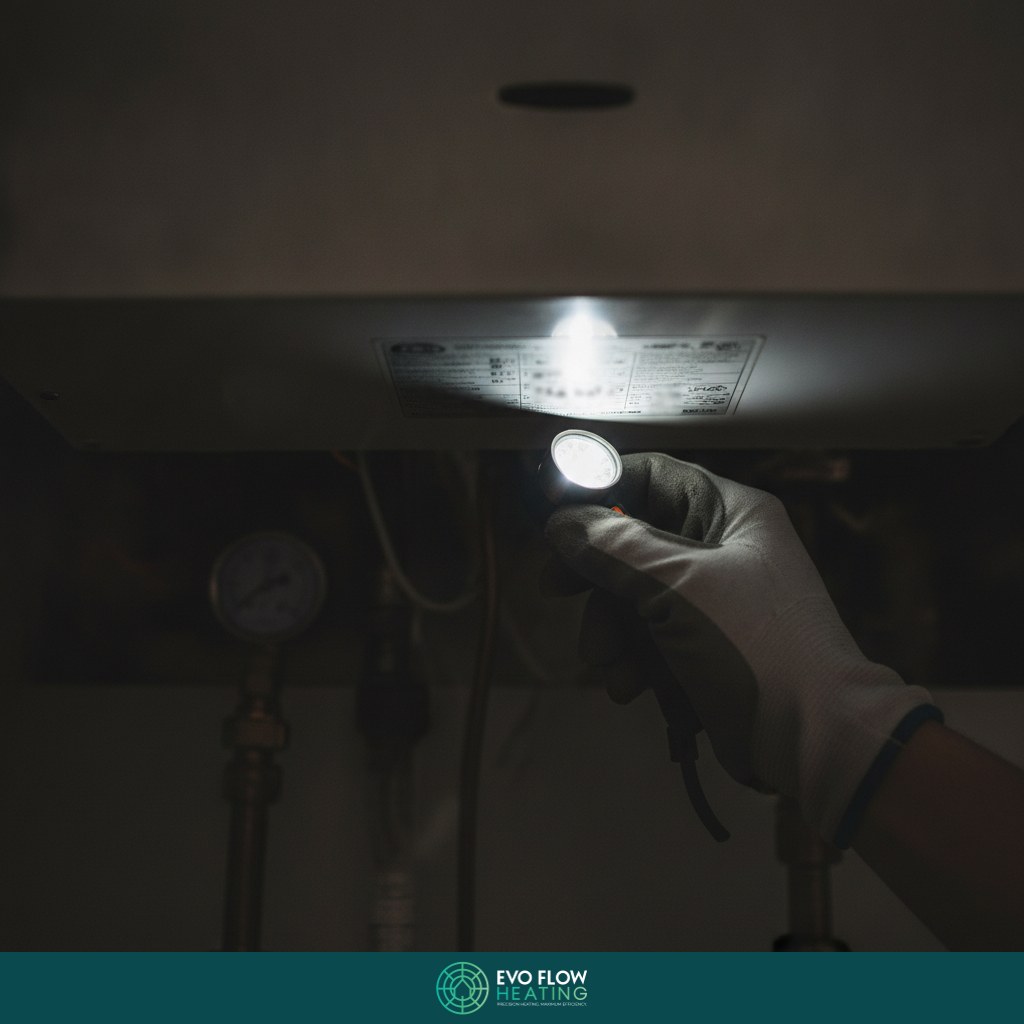
You can answer this yourself in about thirty seconds, and it is worth doing before you speak to anybody. Open the front casing door, or look at the underside of the boiler, and find the data plate. It is a printed label carrying the model name, the GC number (a seven digit code in three groups) and usually a manufacture or serial date.
If there is no obvious date, the GC number itself can be looked up, and any heating engineer will identify the model and its rough production run on sight. Failing that, the paperwork in your Benchmark logbook, if the original installer left one, has the commissioning date on the first page.
The threshold that actually matters is roughly 2005. Boilers made before then are generally non-condensing, meaning they vent hot flue gases rather than recovering that heat. In practice they run at around 70 to 80 percent efficiency. A modern condensing boiler, correctly set up with a low return temperature, runs above 90. On a typical Kent household that difference is meaningful money every winter, and it compounds every year you leave it.
It is also worth knowing whether yours is a combi, a system boiler with a cylinder, or an old regular boiler with a tank in the loft. That decides how straightforward a replacement is, and it is the first thing that will change the price.
Signs You Need A New Boiler
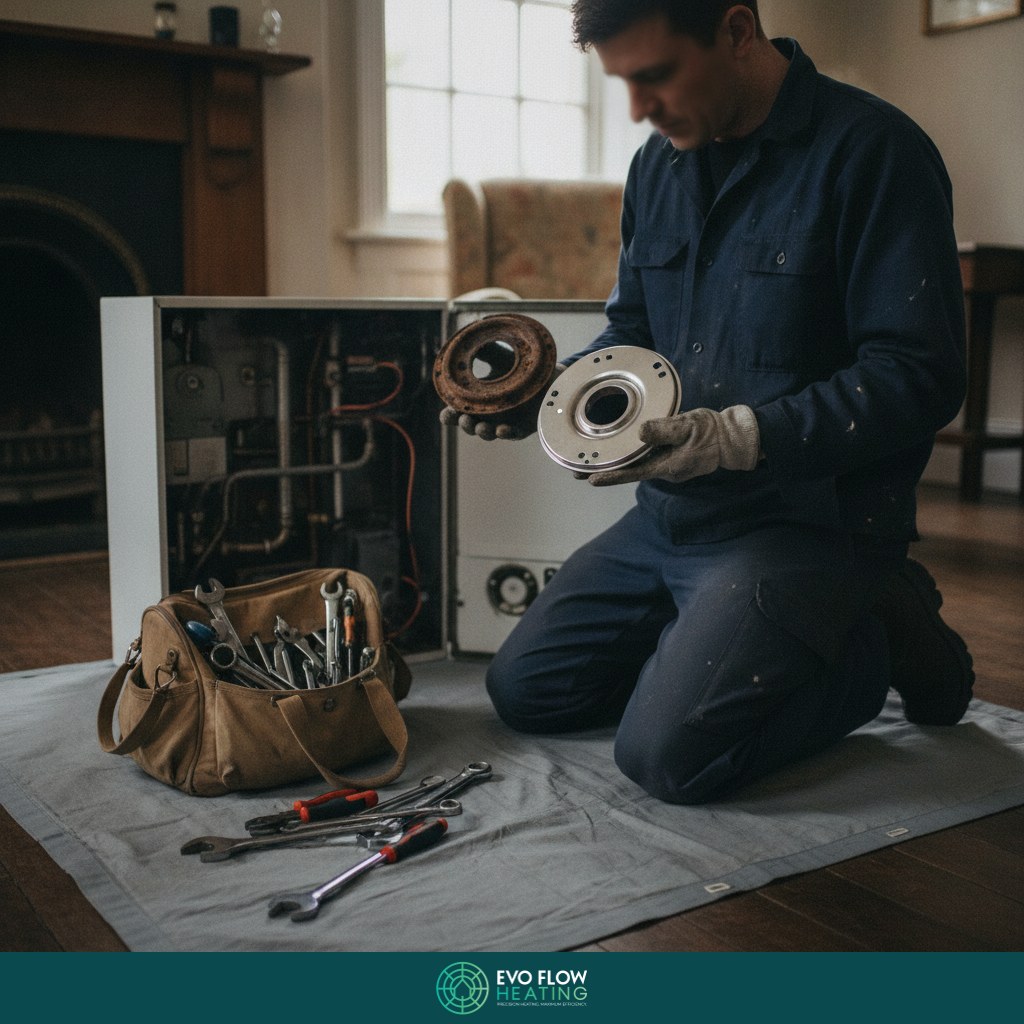
Most lists of warning signs are written to frighten you into a replacement. In reality a lot of the classic symptoms have inexpensive fixes, and it is worth knowing which is which before you spend anything. A boiler that keeps losing pressure is usually a repair, not a replacement.
The ones that genuinely point at replacement are these. Repairs getting closer together, particularly two significant ones inside eighteen months. Parts getting hard to source, which your engineer will tell you honestly if you ask. Gas use climbing with no change in the weather or how you run the heating. And a boiler that will not hold its settings, cycling on and off or dropping out under load.
The ones that usually do not mean replacement, despite how alarming they seem: cold radiators at the bottom, which is sludge and wants a system clean rather than a new boiler; a boiler that needs topping up occasionally, which is usually an expansion vessel or a small leak; and kettling noises, which are frequently debris in the heat exchanger and sometimes clear with a flush.
There is one exception that overrides everything. If you ever smell something sulphurous or eggy near the boiler, see sooting or yellow staining around the casing, or your carbon monoxide alarm sounds, turn the appliance off and call a Gas Safe engineer the same day. That is a safety matter and it is not a question of economics.
“We had an issue with our Worcester boiler. Lucas advised the problem sounded like a flow issue and recommended the power flush, advising that a filter be fitted to keep the system clean after the flush. At the end of the work, Lucas sent the post power flush water quality test results, including the inhibitor, corrosion and pH levels. Lucas arrived on time, worked continuously throughout the day, was very professional and courteous, also cleaning up after he finished work. The quote was very reasonable, considering how much British Gas had quoted.”
Marilyn E. · Homeowner, Kent, powerflush and magnetic filter on a Worcester boiler (Google review)
Should I Replace My Boiler Or Repair It?

The rule of thumb I use is simple. If the boiler is under ten years old and the part is available, repair it. Between ten and fifteen, it depends entirely on what has failed and what it costs relative to a replacement. Over fifteen, a significant repair is usually money you will spend again. Work out what has actually failed first — a lockout showing an L2 fault code is often a cheap fix rather than a dead boiler.
What tips the balance is the pattern rather than the single bill. One repair on a twelve year old boiler is normal maintenance. Three repairs in two winters on the same unit is the boiler telling you something, and at that point you have usually spent a meaningful share of a new installation on keeping an old one limping.
Efficiency belongs in the sum too, and it is the part most people leave out. Moving from a non-condensing boiler at 75 percent to a properly commissioned modern one above 90 changes what you spend every winter for the next decade or more. That saving does not appear on any invoice, which is exactly why it gets ignored.
To put a real number against your own property, three questions on the new boiler cost calculator will give you an indicative installed band before you speak to anybody. Treat it as the start of the conversation rather than a quote.
| Boiler age | Typical verdict | What tips it the other way |
|---|---|---|
| Under 8 years | Repair | Heat exchanger failure, or the part is obsolete |
| 8 to 12 years | Usually repair | Second significant repair inside 18 months |
| 12 to 15 years | Depends on the repair cost | Repair over roughly a third of a replacement |
| Over 15 years | Usually replace | Minor fault, parts available, system clean |
| Pre-2005 (non-condensing) | Replace | Almost nothing. The efficiency gap decides it |
Replacing A Boiler Before Winter: Why Timing Matters
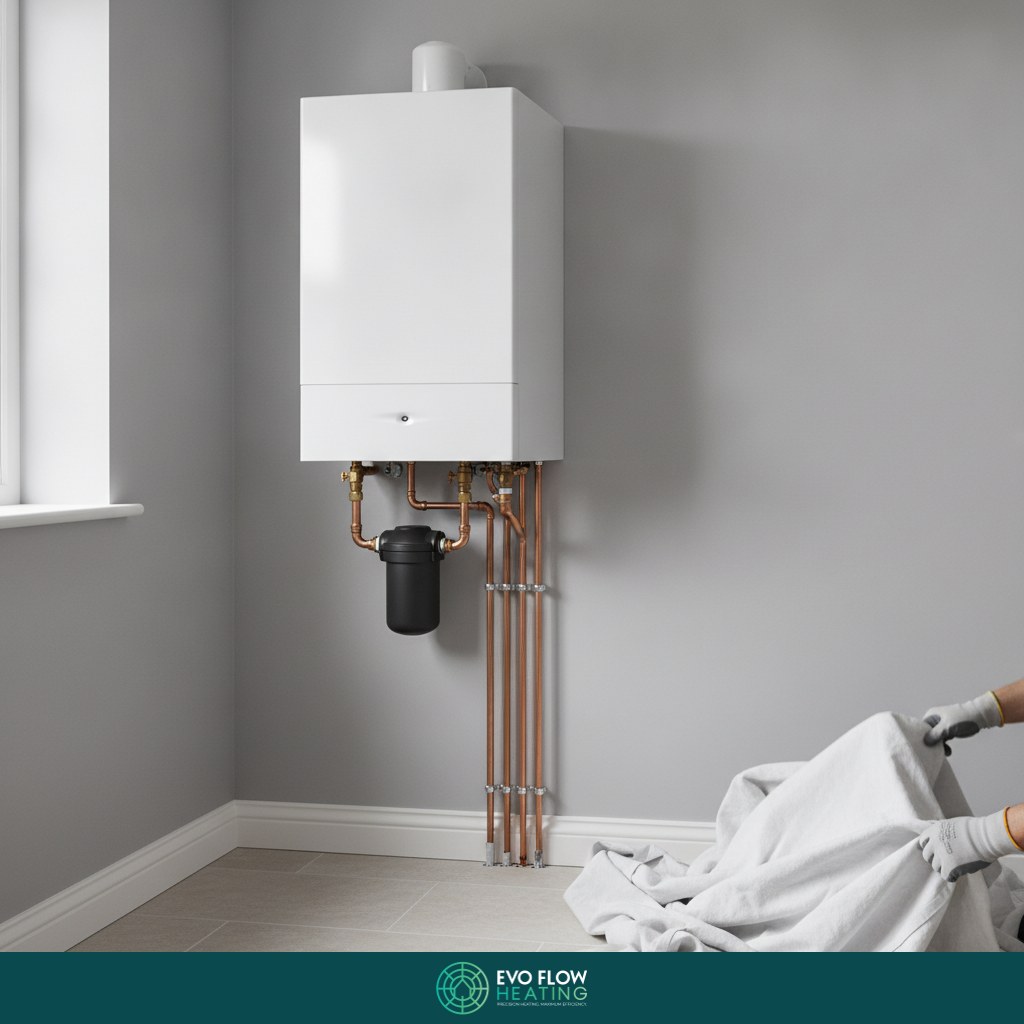
The month you book changes the job you get, and it is the part of the decision most people never consider until the choice has already been made for them.
Plan a replacement now and you are choosing. You get a proper survey, a heat loss calculation, time to compare quotes, and the boiler that actually suits the property rather than whichever unit is available at short notice. You pick a date that works around your week. The house has heating throughout, because the old boiler is still running while the new one is arranged.
Leave it until the boiler fails in January and every one of those choices disappears. You are choosing from what is in stock. Diaries across Kent are full, so you wait. The house is cold while you wait. And the pressure to accept the first quote that can attend is enormous, which is precisely the condition under which people end up with an oversized boiler fitted onto an uncleaned system.
There is a quieter benefit too. A summer or early autumn installation gives us time to do the parts of the job that get skipped when everyone is in a hurry: cleaning the system properly, balancing the radiators, setting the controls so the boiler actually modulates. Those are the things that decide whether your new boiler runs efficiently for fifteen years or just runs. If the system is also carrying debris, a power flush before the new boiler goes on costs far less than the blocked heat exchanger it prevents.
If you are weighing a like for like replacement against moving to a heat pump, this is also the right season to price both, because the grant paperwork and the survey take time that January does not give you. Whether an air source heat pump suits the property comes down to insulation and radiator sizing far more than it does to the boiler you are replacing.
Your Pre-Winter Boiler Checklist
- Find the data plate and note the manufacture date. Anything made before roughly 2005 is almost certainly non-condensing, and that changes the arithmetic immediately.
- Dig out your servicing records. A boiler serviced every year has a very different outlook to one that has not been touched since it was fitted.
- Count the repairs, not the cost of the last one. Two significant repairs inside eighteen months is the pattern that matters.
- Check whether your radiators are cold at the bottom. If they are, the system needs cleaning, and that is a separate job to the boiler question.
- Ask your engineer whether parts are still available for your model. A straight answer here tells you how much runway you have.
- Get the survey done before you need it. A heat loss calculation in September is a calm conversation; in January it is a formality nobody has time for.
- Never ignore an eggy smell, sooting, or a carbon monoxide alarm. Turn the boiler off and call a Gas Safe engineer that day.
Related heating services and areas
Our services
Areas we cover
Evo Flow Heating
Designed properly, not slapped on
Lucas designs the system and Lucas runs the install. Heat loss calc, flow rates, modulating controls and balanced commissioning on every job. Gas Safe registered, MCS-certified for heat pumps, and BUS grant claim handled for you. Itemised written quote with kit, labour, controls and VAT broken out, so three quotes can be compared like for like.
Or call Lucas on 01474 612061 · office 01474 612061
Frequently Asked Questions
How long do boilers last on average in the UK?
Ten to fifteen years for a modern condensing boiler that is serviced annually. Servicing is the variable that matters most: an annually serviced boiler in a clean system regularly passes fifteen, while a neglected one in a sludged circuit can fail before ten.
When should I replace my boiler rather than repair it?
Under ten years old with an available part, repair it. Between ten and fifteen it depends on the cost of the repair against a replacement. Over fifteen, or after two significant repairs inside eighteen months, replacement is usually the better spend.
How do I find out how old my boiler is?
Look for the data plate inside the front casing or on the underside of the boiler. It carries the model, the GC number and usually a manufacture date. If there is no date, the GC number identifies the model, or the commissioning date will be in the Benchmark logbook if the original installer left one.
Is It Better To Replace A Boiler In Summer?
The work itself is priced the same, but you get a materially better job. You choose the boiler rather than taking what is in stock, you have time to compare quotes properly, and the system clean and balancing that get rushed in winter actually happen. You also keep heating while the work is arranged.
Does a new boiler need a power flush first?
The system needs cleaning to a standard the manufacturer will accept, and on an older system carrying visible debris that usually means a power flush. Fitting a new boiler onto a dirty circuit voids most warranties and shortens the life of the new heat exchanger.
Do you cover my part of Kent?
Yes. We work across Gravesend, Dartford, Maidstone, Tonbridge, Sevenoaks, Pembury and most of the county. Call 01474 612061 and Lucas will talk it through, or use the contact form for a callback.
For more Kent heating advice, browse the Evo Flow Heating blog or call Lucas on 01474 612061.