
By Lucas Morley, owner and heating engineer at Evo Flow Heating (Heat Geek partner, Gas Safe registered, MCS certified) · About Evo Flow Heating · Last updated 19 July 2026
Summary
If you are off the gas grid on oil or LPG, a heat pump almost always wins in Kent once the £7,500 grant is counted. If you are on mains gas, it depends on your property and, more than anything, on whether the system is designed properly. A new boiler costs less up front and suits homes with high flow temperature demands or serious insulation problems. The honest answer comes from a heat loss calculation, not from a brochure.
From Lucas, the owner
The single number that decides whether a heat pump saves you money is the flow temperature it is designed to run at. At 35 degrees a heat pump will produce around four units of heat per unit of electricity. At 55 degrees that drops to roughly two and a half. Same machine, same house, wildly different bill. That number is set at the design stage by radiator sizing, not by the kit you buy. Hate to say it, but the industry has been dumbed down by forgiving boilers, and heat pumps do not forgive lazy installs the way boilers do.
Your boiler is coming to the end of its life and you have a decision to make that did not exist a decade ago. Replace like for like, or switch to an air source heat pump with £7,500 of government money behind it. Most of the advice online is written by someone selling one or the other, which is not much help when you are the one paying.
We fit both. This guide sets out how the choice actually falls in Kent homes, where each option genuinely wins, and the one question that matters more than any other.
Boiler Replacement Vs Heat Pump: The Short Answer

| New gas boiler | Air source heat pump | |
|---|---|---|
| Installed cost | £2,000 to £3,200 | £10,000 to £14,000 |
| Grant available | None | £7,500 (BUS) |
| Net cost to you | £2,000 to £3,200 | £2,500 to £6,500 |
| VAT | Standard rate | 0% until 2027 |
| Install time | 1 to 2 days | 2 to 5 days |
| Efficiency | Around 90% | 300% to 400% |
| Runs best against | Any property | Oil, LPG, electric |
| Radiator changes | Rarely needed | Some usually needed |
| Outdoor space | Not needed | Required |
| Typical lifespan | 12 to 15 years | 15 to 20 years |
Read the net cost row again, because it surprises most people. Once the grant is applied, a heat pump on a well suited Kent home can land within a couple of thousand pounds of a premium boiler replacement, not the ten thousand pound gap people expect.
When A New Boiler Is The Right Choice
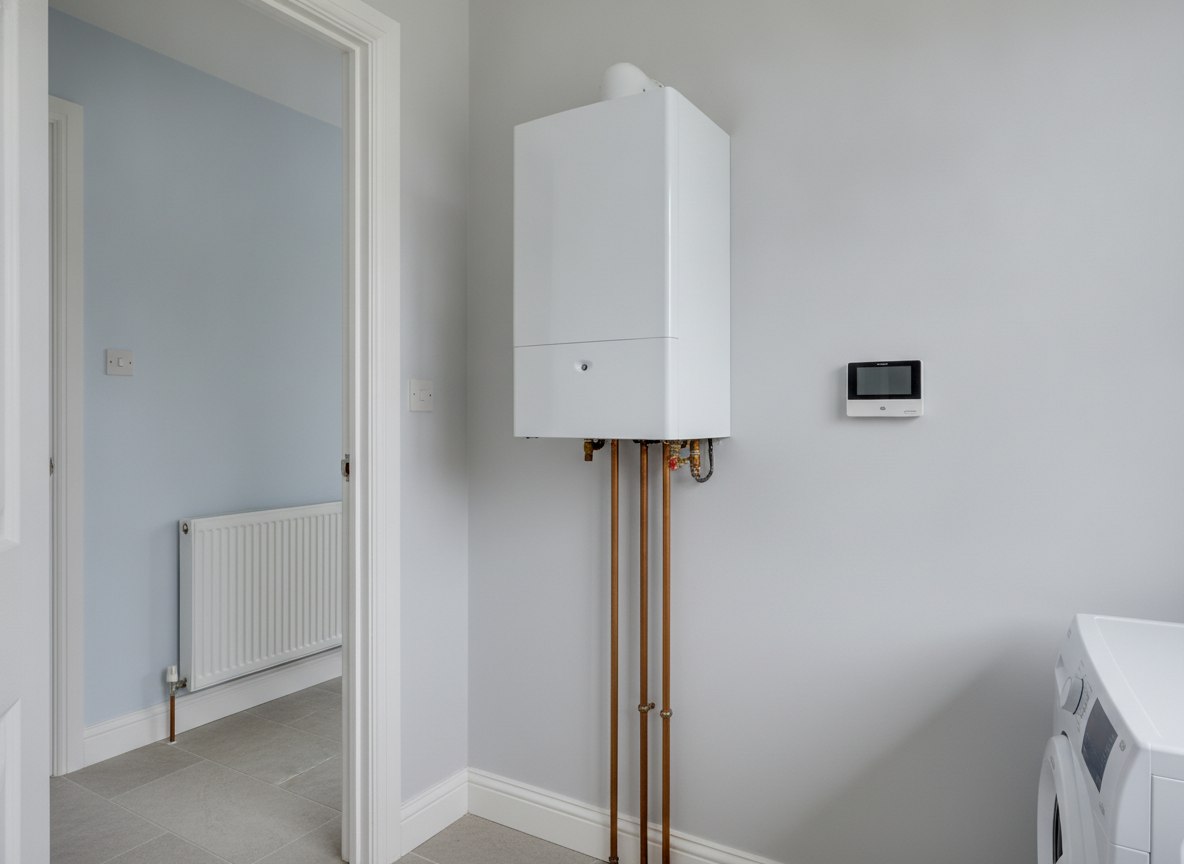
Plenty of Kent homes are better served by a new boiler, and we say so regularly. It is the right answer when:
- Upfront cost is the binding constraint. Even after the grant, a heat pump usually costs more on the day.
- The property has serious insulation problems that are not being addressed. A heat pump in a leaky house needs high flow temperatures, which is exactly where it stops making financial sense.
- There is nowhere sensible to put an outdoor unit. Terraced houses with no rear access, some flats, and tightly constrained conservation area frontages.
- You are on mains gas and moving in a few years. The payback period may not land while you still own the house.
- Hot water demand is very high and there is no room for an adequately sized cylinder.
A modern condensing boiler runs at around 90% efficiency and will serve a well designed system reliably for 12 to 15 years. That is not a consolation prize. Our gas boiler installation service covers sizing, controls and cleansing in the same design-first way we approach heat pumps.
Not sure which way to go?
We survey free and quote both routes side by side with real running cost figures for your actual property. Call Lucas on 01474 612061.
Request a free survey →When An Air Source Heat Pump Wins In Kent
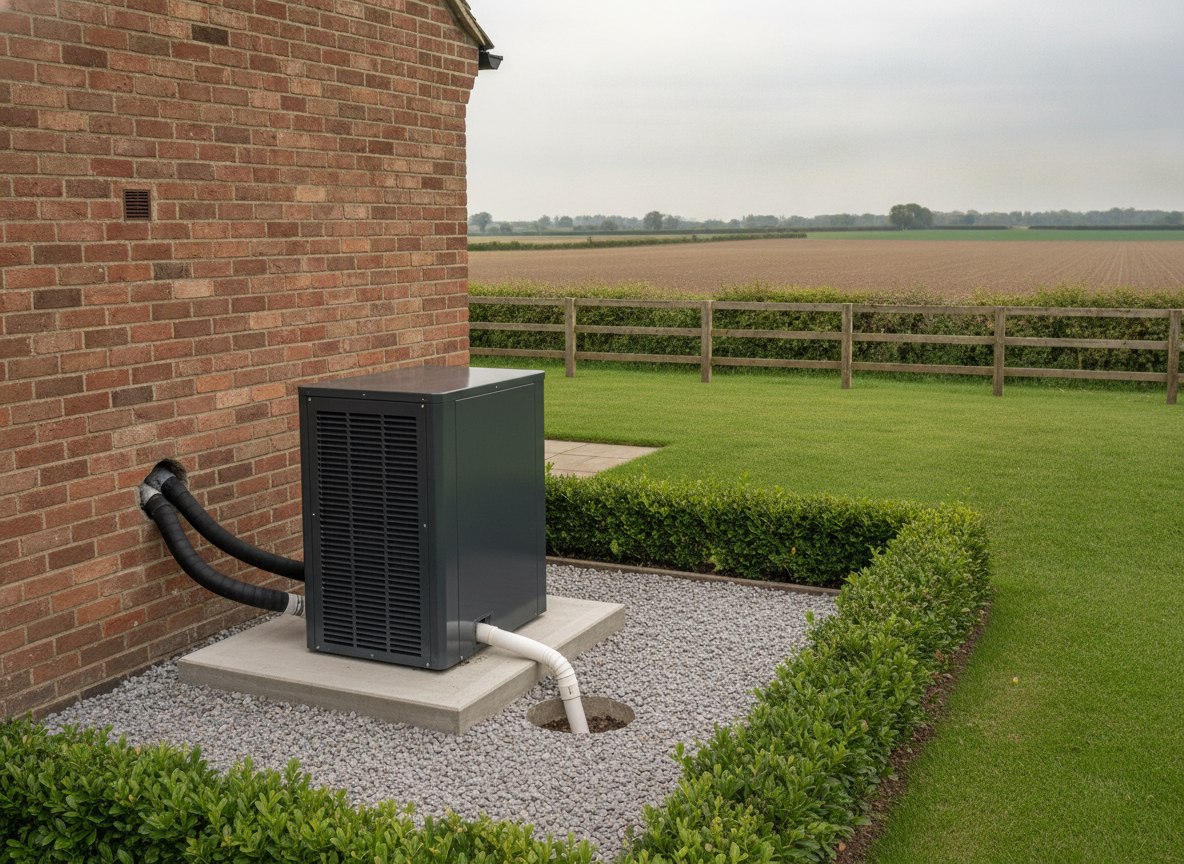
The clearest case in the whole county is the off grid property. If you are on oil or LPG anywhere around the Weald, Ide Hill, Underriver or the rural pockets outside the towns, the comparison is not close:
- Oil and LPG are expensive fuels, so the running cost gap works heavily in the heat pump’s favour
- The £7,500 grant applies on the switch from any fossil fuel system
- Rural plots have space, so siting the outdoor unit is rarely a problem
- No more tank, no more deliveries, no more watching the oil price
- 0% VAT on the installation until 2027
On mains gas it is a genuine judgement call. A well designed heat pump in a reasonably insulated Kent home will be roughly competitive with gas on running cost and better on carbon. Design it badly and it will cost more than the boiler it replaced. That is the honest position, and anyone telling you a heat pump always saves money on mains gas is selling something.
Full detail on the grant, eligibility and what installations actually cost is on our Boiler Upgrade Scheme page, and the installation work itself is covered on our air source heat pump service page.
The Question That Decides It: What Is Your Heat Loss?
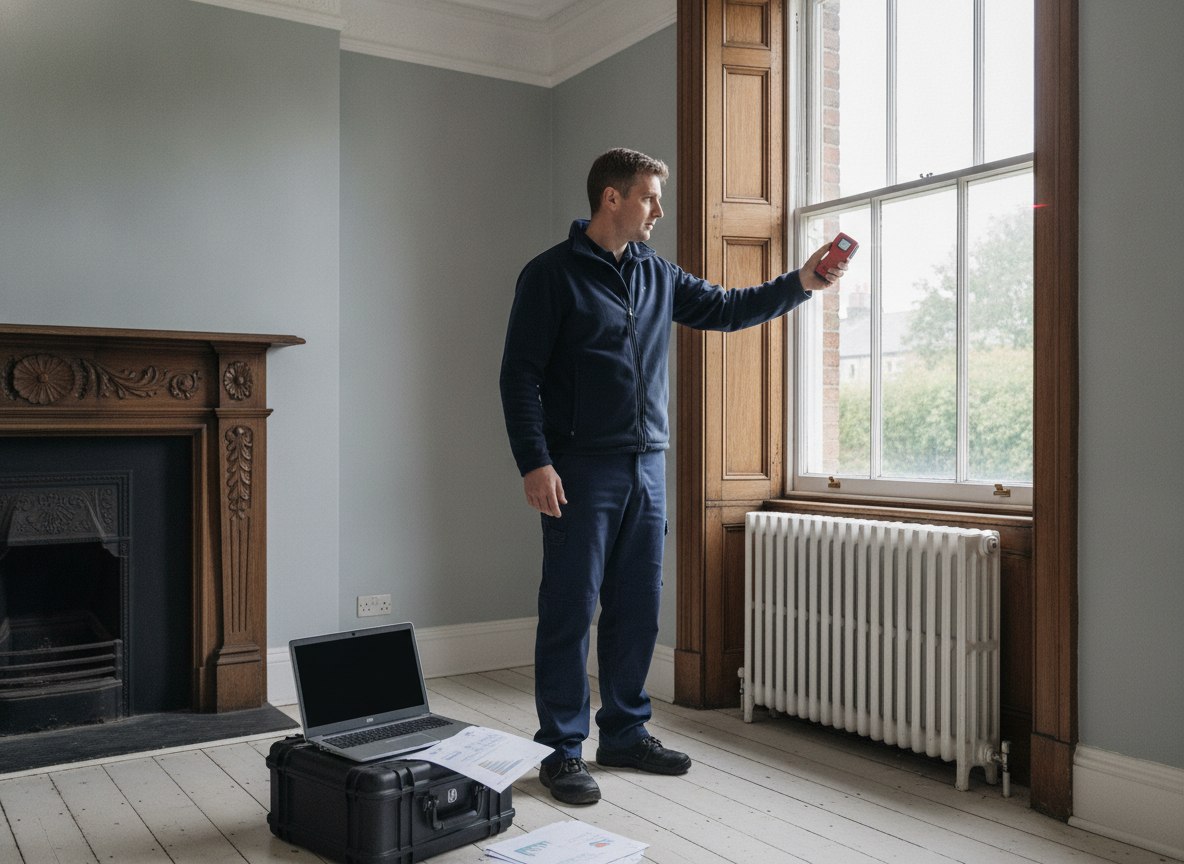
Everything above is context. This is the actual decision point, and it is a number, not an opinion.
A heat loss calculation measures how much heat your property loses on the coldest design day, room by room, based on wall construction, glazing, dimensions and what sits above and below each space. Two three bedroom houses in Kent can differ by a factor of three. A well insulated modern home in Dunton Green might need 6kW. A Victorian semi near Maidstone town centre with solid walls can need 18kW.
That number tells you three things at once: what size heat pump you would need, which radiators would have to grow to run at a lower flow temperature, and therefore what the whole job would cost and what it would cost to run. Without it, nobody can honestly tell you whether a heat pump suits your house. With it, the answer is usually obvious within minutes.
We do this before quoting, on every job, for both options. It is the foundation of our heating system design service, and it is the reason we can quote a boiler and a heat pump side by side with running costs for each rather than a brochure average.
Verified Google review
“The booking process was very straightforward with the pricing very clear. The engineer arrived on time and did an excellent job. I have used this company for yearly boiler servicing as well as the installation of a Hive heating system and the replacement of all the radiators in the house. I would highly recommend and will be using them again.”
James P. · Homeowner, Kent · Radiator replacement, smart controls and servicing
Do You Have To Replace All Your Radiators For A Heat Pump?
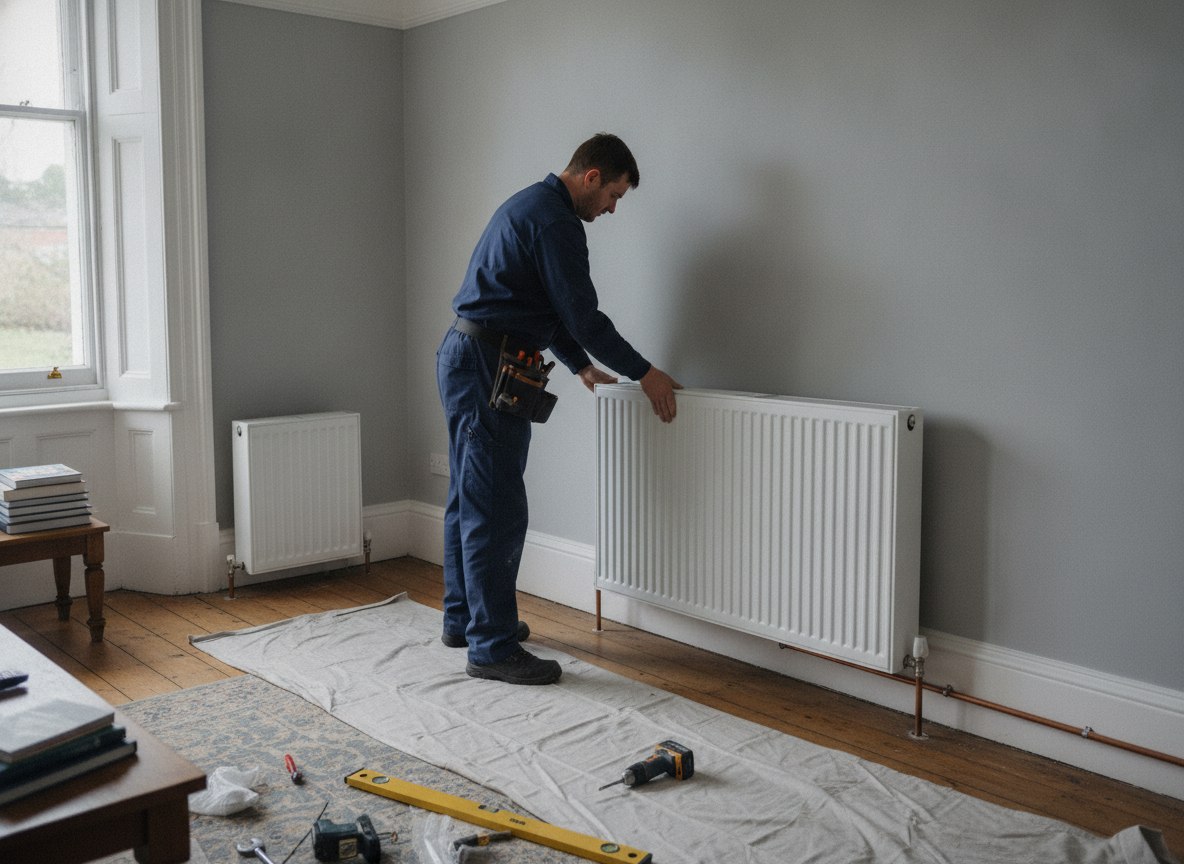
No, and the assumption that you do puts a lot of people off unnecessarily. On a typical Kent installation we replace perhaps three or four out of eleven.
The reasoning is straightforward. A radiator gives out heat in proportion to how much hotter it is than the room. A boiler running at 70 degrees gets plenty of output from a small radiator. A heat pump running at 45 degrees gets less from that same radiator, so where a room is tight on output the radiator needs to be physically larger to compensate.
Which rooms need it is decided by the heat loss figures, not by guesswork or by replacing everything as a default. Two useful things worth knowing:
- Many radiators are already oversized. Plenty of Kent homes had radiators fitted generously years ago, and those work at heat pump temperatures without any change.
- Underfloor heating is the ideal partner. It runs at exactly the low temperatures a heat pump likes, so if you are renovating a floor anyway, our underfloor heating installation is well worth folding into the same project.
Replacing every radiator by default is an easy way to inflate a quote by several thousand pounds. Ask any installer which specific radiators need changing and why. If they cannot answer room by room, they have not done the calculation.
Running Costs Compared
How the two compare depends almost entirely on which fuel you are leaving behind:
| Currently heating with | Switching to a heat pump |
|---|---|
| Oil | Clear running cost reduction in most cases |
| LPG | Clear running cost reduction in most cases |
| Electric storage heaters | Largest reduction of all |
| Mains gas | Roughly competitive when designed well, worse when designed badly |
Three variables decide where you land on mains gas: the flow temperature the system is designed around, the electricity tariff you choose, and how well the property holds heat. A heat pump designed to run at 35 to 45 degrees on a heat pump tariff is a very different financial proposition to one bolted onto undersized radiators and left at 55.
Because of that we give you a projected annual running cost for your actual property at survey stage, calculated from your heat loss figures. If the numbers do not work for your home, that is worth knowing before you commit rather than after.
What Happens To Your Hot Water?
This is the part people forget until late in the process, and on some Kent homes it is the deciding factor.
A heat pump cannot heat water instantly the way a combi does. It needs a cylinder to store hot water in. So if you currently have a combi and no cylinder, switching to a heat pump means finding room for one, typically 180 to 250 litres depending on the household. That is roughly the footprint of a tall fridge, and it needs to go somewhere sensible: an airing cupboard, a utility room, a loft space with adequate access, or occasionally a garage.
- If you already have a cylinder (a regular or system boiler setup), you are in good shape. The cylinder may need replacing with a heat pump compatible one that has a larger coil, but the space and the pipework already exist.
- If you have a combi, the cylinder is an additional cost and an additional space requirement. Allow roughly £1,200 to £2,200 fitted, and it needs to be in the design from day one rather than added as an afterthought.
- If there is genuinely nowhere to put one, that is a legitimate reason a heat pump may not suit your property, and we will say so at survey rather than after.
The upside is that a properly sized cylinder gives better hot water performance than most combis, particularly if more than one shower runs at once. Kent is a hard water area, so the coil and the expansion vessel are worth specifying properly rather than accepting whatever is nearest to hand on the shelf.
How To Decide, In Order

- Check what fuel you are on. Off grid on oil or LPG pushes you strongly toward a heat pump before anything else is considered.
- Get a heat loss calculation. Not an estimate, not a floor area rule of thumb. Room by room.
- Check the grant. Confirm your EPC has no outstanding loft or cavity wall insulation recommendations, since that is the condition that blocks most applications.
- Look at where an outdoor unit could go. Rear or side elevations usually work, front elevations rarely do.
- Get both quotes, itemised. Boiler and heat pump, with projected running costs for each.
- Decide on the numbers. Not on a sales pitch, and not on what your neighbour did.
Frequently Asked Questions
Does A Heat Pump Cost Less To Run Than A Gas Boiler In Kent?
Against oil, LPG and electric heating, almost always. Against mains gas it is roughly competitive when the system is designed to run at a low flow temperature and paired with the right electricity tariff, and worse when it is not. The design is what decides it, which is why we run the calculation before quoting.
How Much Is A Heat Pump After The £7,500 Grant?
A typical Kent installation is £10,000 to £14,000 before the grant, leaving a net £2,500 to £6,500 depending on property size, radiator upgrades and cylinder requirements. Heat pump installations also carry 0% VAT until 2027.
Will A Heat Pump Keep My House Warm In A Kent Winter?
Yes, when it is sized correctly. Air source heat pumps work well below freezing and are used routinely across Scandinavia in far colder conditions. Undersized systems are the ones that struggle, which is why the heat loss calculation comes first.
Can I Keep My Boiler As A Backup?
Hybrid systems that retain a fossil fuel boiler alongside a heat pump are not eligible for the Boiler Upgrade Scheme. A correctly sized heat pump does not need a backup, so keeping one usually means paying to maintain two systems while forfeiting £7,500.
Are Heat Pumps Noisy?
Modern units run at roughly 40 to 50 decibels at the property boundary, which is quieter than a fridge. Noise assessment against the boundary is part of MCS certification rather than an optional extra, and sensible positioning handles the rest.
What If My House Is A Period Property?
Kent has a lot of period stock and most of it can run a heat pump, provided the design accounts for solid wall heat loss, which is roughly double that of a cavity wall. In practice that usually means larger radiators in a few rooms. Some properties need insulation work first, and where that is the case we will say so rather than sell around it.
How Long Does Each Installation Take?
A boiler replacement is one to two days. A heat pump installation is typically two to five days depending on the property and how much emitter work is involved. From first survey to switch-on on a grant funded heat pump is usually four to eight weeks including the Ofgem approval.
Related heating services and areas
Useful sources
MCS certified installers
Boiler Upgrade Scheme
Energy Saving Trust
Designed properly, not slapped on
We quote boilers and heat pumps side by side, both sized from a room by room heat loss calculation, both with projected running costs for your actual property. If a heat pump would not suit your home, we will tell you and fit the boiler instead.
Request a free survey →Or call Lucas on 01474 612061
Lucas designs the system and Lucas runs the install, whichever route you choose. We are Gas Safe registered for boiler work and MCS certified for heat pumps, which is also what makes your £7,500 grant claim valid, and we handle the Ofgem paperwork ourselves. One survey, two honest quotes, and a decision made on numbers rather than a sales pitch.